Finance Basics: Opportunity Cost
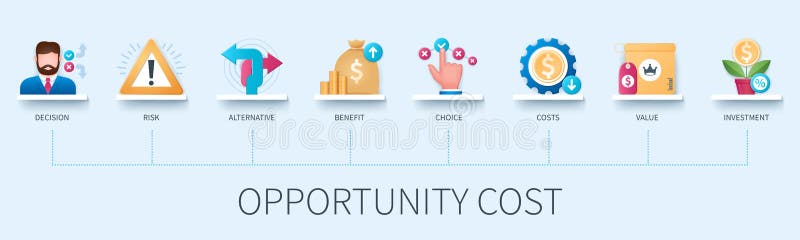
Opportunity Cost: A Concise Guide
Opportunity cost represents the potential benefits forfeited when choosing one alternative over another. It is not simply the monetary cost of a decision, but the value of the next best alternative use of the same resources. Understanding opportunity cost is fundamental to sound financial decision-making.
Economic Significance
The concept of opportunity cost is crucial in economics as it underlines the scarcity of resources. Every decision, whether personal or corporate, involves trade-offs. Ignoring opportunity cost can lead to inefficient resource allocation and suboptimal outcomes. Governments use this concept when deciding how to allocate taxpayer funds. Businesses weigh opportunity cost when considering investments or expansion. Individuals apply it, often subconsciously, to everyday choices such as spending versus saving. Failing to account for opportunity cost can result in misallocation of capital, reduced profitability, and diminished long-term wealth accumulation.
Practical Example
Consider an individual with $30,000. They are contemplating two options: purchasing a new car or investing the money in a diversified investment portfolio. Choosing the car provides immediate utility through transportation and perhaps perceived status. However, it comes at the expense of the potential returns that could be generated by investing the $30,000. If the investment were projected to yield an average annual return of 7% over a 10-year period, the opportunity cost of buying the car would be the compounded value of that investment, considerably more than the initial $30,000. Similarly, consider a recent graduate weighing employment versus further education. Choosing to work immediately provides current income but foregoes the potential for higher earnings associated with a graduate degree. The opportunity cost of working is the increased future earning potential, the enhanced skill set, and potential career advancement associated with graduate studies.
Data Analysis
The following table illustrates the trade-offs inherent in considering opportunity cost:
| Choice A | Choice B (Opportunity Cost) | Outcome |
|---|---|---|
| Buy New Car ($30k) | Invest $30k for 10 years | Depreciating Asset |
| Go to College | Work for 4 years | Higher Career Earnings vs Immediate Income |
In the first scenario, opting for the new car results in owning a depreciating asset. While it provides immediate utility, the $30,000 investment forgone could have grown significantly over 10 years through compounding interest. The opportunity cost is not just the $30,000, but the potential return on that investment.
In the second scenario, choosing to attend college means foregoing four years of potential income from working. However, the long-term benefits of a college education, such as higher earning potential and increased job opportunities, often outweigh the short-term income loss. The opportunity cost here is the immediate income stream sacrificed for the promise of greater future rewards.
Pros and Cons
Pros of Considering Opportunity Cost:
- Improved Decision-Making: Incorporating opportunity cost into decision-making processes leads to more informed and rational choices.
- Efficient Resource Allocation: Understanding the true cost of a decision ensures resources are allocated to their most valuable uses.
- Enhanced Profitability/Wealth Accumulation: By selecting options with the lowest opportunity cost, individuals and businesses can maximize returns.
Cons of Considering Opportunity Cost:
- Difficulty in Quantification: Accurately quantifying all potential benefits of alternative choices can be challenging. Estimations and projections are often required, which may be subject to error.
- Complexity: Incorporating opportunity cost into every decision can become complex and time-consuming, especially when numerous alternatives exist.
- Subjectivity: The value assigned to different opportunities can be subjective and vary depending on individual preferences and circumstances.
Strategic Conclusion
The principle of opportunity cost is indispensable for making financially sound decisions. While accurately quantifying every alternative may be difficult, acknowledging the potential benefits forgone by choosing one option over another provides a framework for more reasoned resource allocation. By carefully weighing the explicit costs against the implicit costs represented by the opportunity cost, individuals and organizations can strive to make choices that maximize long-term value. Understanding this fundamental economic principle is critical for achieving financial success.
Share this Analysis