Finance Basics: Investing in Stocks
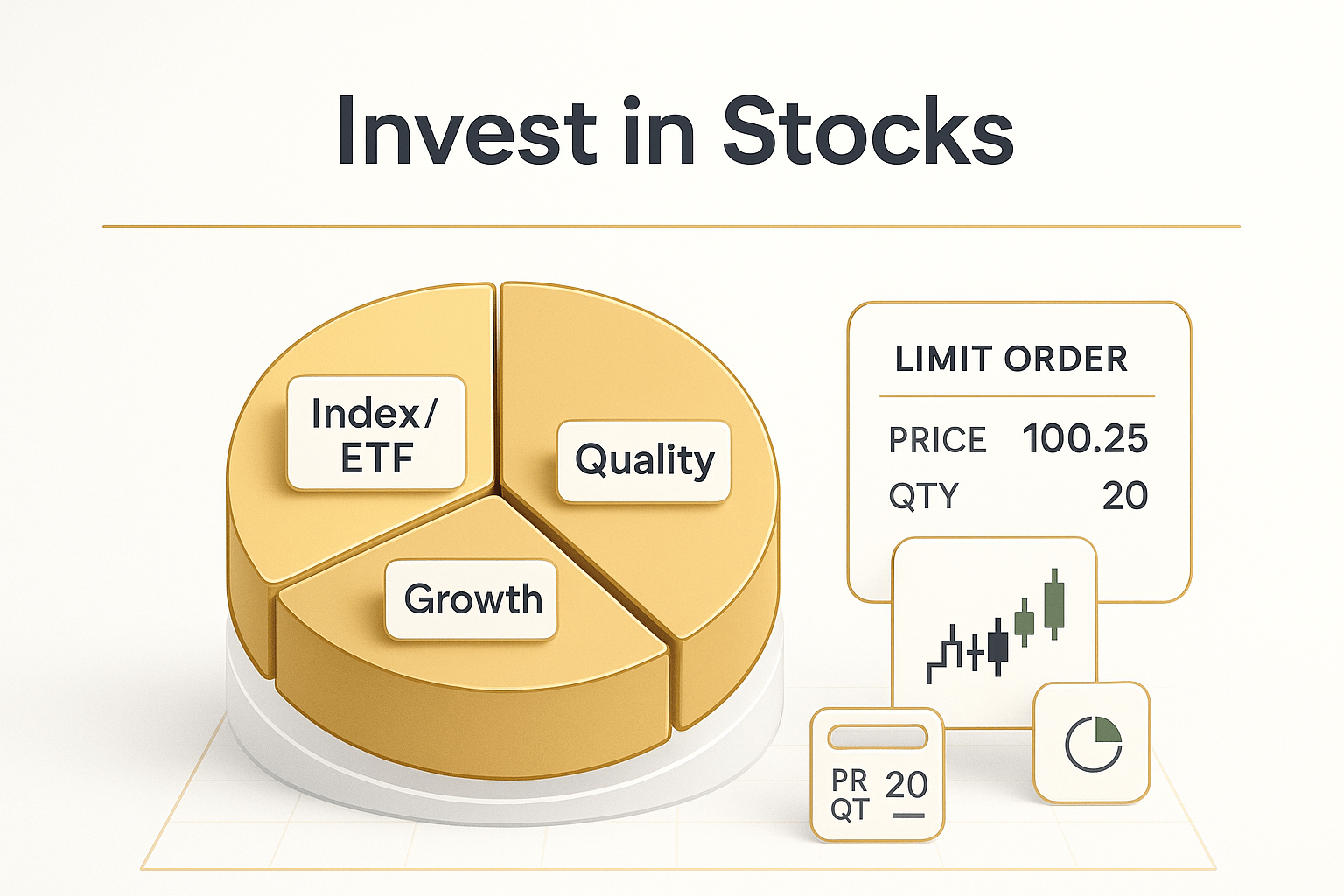
Investing in Stocks: A Practical Guide
Investing in stocks, also known as equities, represents the purchase of partial ownership in a publicly traded company. This ownership entitles the investor to a proportion of the company’s assets and future earnings, subject to the terms outlined in the company’s governing documents. Stocks are bought and sold on stock exchanges, facilitating the transfer of ownership between investors.
Economic Significance
The stock market serves as a crucial mechanism for capital allocation within an economy. Companies utilize the issuance of stock to raise funds for expansion, research and development, debt repayment, and other strategic initiatives. By providing a platform for investment, the stock market channels savings into productive enterprises, fostering economic growth. The performance of the stock market is also a widely tracked indicator of overall economic health. Significant declines can signal economic downturns, while sustained growth often reflects positive economic sentiment and corporate profitability. For example, the S&P 500, a market-capitalization-weighted index of the 500 largest publicly traded companies in the United States, is commonly used as a benchmark for the broader U.S. equity market and, by extension, the U.S. economy. Historically, returns on stocks have exceeded those of bonds and other asset classes over long periods, although with higher volatility.
Practical Example
Consider an individual who invests in shares of a hypothetical technology company, "TechCorp," trading on the NASDAQ. The investor purchases 100 shares at a price of $50 per share, resulting in a total investment of $5,000. Several scenarios could unfold:
-
Price Appreciation: If TechCorp performs well, developing a successful new product line, and the demand for its shares increases, the share price could rise to $75. The investor could then sell their 100 shares for $7,500, realizing a profit of $2,500 (excluding transaction costs and taxes).
-
Dividend Income: TechCorp might also distribute a portion of its profits to shareholders in the form of dividends. If TechCorp pays an annual dividend of $1 per share, the investor would receive $100 per year for as long as they hold the shares.
-
Price Depreciation: Conversely, if TechCorp faces challenges, such as increased competition or a decline in product demand, the share price could fall to $30. Selling the shares at this price would result in a loss of $2,000.
This example illustrates the inherent risks and potential rewards associated with stock investments. The investor's return is directly tied to the performance of the company and the overall market conditions.
Data Analysis
Key financial metrics are used to evaluate the attractiveness of a stock. These metrics provide insights into a company's financial health and valuation:
| Metric | Meaning |
|---|---|
| P/E Ratio | Price vs Earnings |
| Dividend Yield | Return % |
| EPS | Profit per share |
The Price-to-Earnings (P/E) ratio indicates how much investors are willing to pay for each dollar of a company’s earnings. A higher P/E ratio may suggest that a stock is overvalued or that investors expect high growth in the future. A lower P/E ratio may suggest undervaluation or lower growth expectations. However, comparing P/E ratios across different industries can be misleading.
The Dividend Yield represents the annual dividend payment as a percentage of the stock's price. It indicates the return on investment an investor can expect from dividends alone. A higher dividend yield can be attractive to income-seeking investors, but it is important to consider the sustainability of the dividend payout.
Earnings Per Share (EPS) measures a company's profitability on a per-share basis. A higher EPS generally indicates greater profitability. Investors often track EPS growth over time to assess a company's financial performance.
These metrics are crucial components of fundamental analysis, but should be used in conjunction with other financial information and industry analysis before making investment decisions.
Pros and Cons
Pros:
- Potential for High Returns: Stocks historically offer the potential for higher returns compared to other asset classes like bonds.
- Inflation Hedge: Stock prices tend to rise during periods of inflation, providing a hedge against the erosion of purchasing power.
- Ownership and Voting Rights: Stockholders have ownership rights in the company and may have voting rights on important corporate matters.
- Liquidity: Stocks traded on major exchanges are generally liquid, allowing investors to buy and sell shares relatively easily.
Cons:
- Volatility: Stock prices can fluctuate significantly, leading to potential losses for investors.
- Risk of Loss: There is a risk of losing the entire investment if the company performs poorly or goes bankrupt.
- Market Risk: Stock prices are influenced by overall market conditions, economic factors, and geopolitical events, which are often beyond the control of individual investors.
- Company-Specific Risk: The performance of a stock is tied to the specific company's financial health and management decisions.
Strategic Conclusion
Investing in stocks offers the potential for substantial wealth creation, but also carries inherent risks. A diversified portfolio, coupled with thorough research and an understanding of risk tolerance, is essential for navigating the stock market successfully. Investors should carefully consider their financial goals, time horizon, and risk appetite before allocating capital to stocks. Employing a long-term perspective and avoiding emotional decision-making can contribute to more favorable investment outcomes.
Share this Analysis